

 Admin: SKB Seeds
India is an agricultural country where farming depends on seasonal patterns. Farmers across regions grow different crops depending on rainfall, temperature, humidity and soil type. The important question every time asked is what the three cropping seasons are in India.
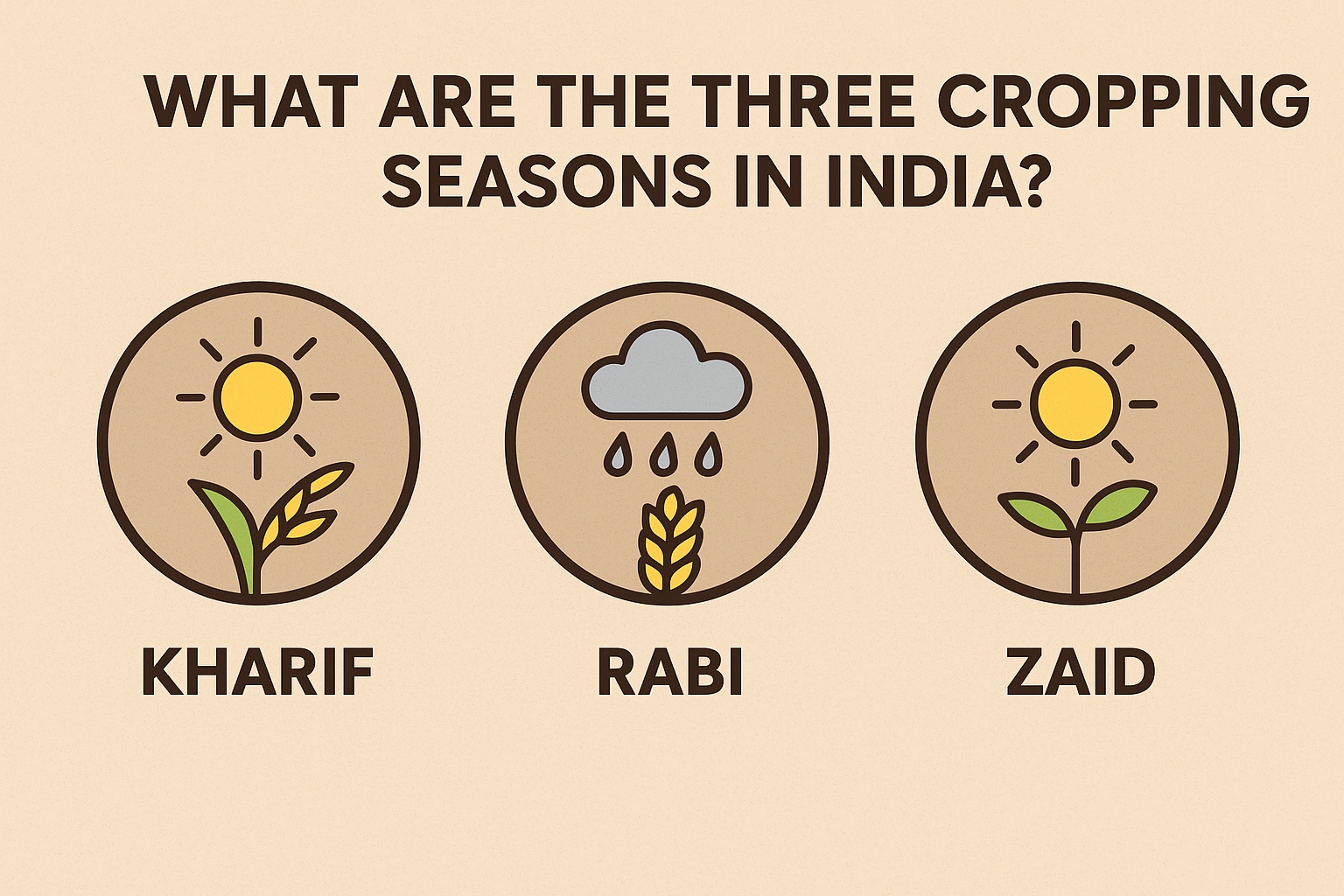
India’s agriculture is divided into Kharif, Rabi, and Zaid seasons. Each season has its specific climate, crops, and cultivation method. Understanding these seasons helps farmers plan their farming cycle, increase productivity, and reduce losses.
This blog explains these three cropping seasons in simple language and shows how high-quality seeds from SKB Seeds can help farmers achieve better results.
In India, farming activities are organised around three main cropping seasons based on the monsoon cycle:
Each season plays a vital role in ensuring year-round food production and agricultural sustainability. This continuous cycle helps farmers utilize their land efficiently and maintain soil fertility.
The Kharif season in India starts with the monsoon rains in June or July and ends around October. It is the most important among the three cropping seasons in India, as most crops depend on rainfall. Farmers sow seeds at the start of the rains and harvest after the monsoon.
Climate Requirements:
Hot and humid weather with moderate to heavy rainfall.
Sowing Period: June - July
Harvesting Period: September - October
Kharif crops example
Best Regions: Maharashtra, Gujarat, Madhya Pradesh, Karnataka, and Tamil Nadu.
The Rabi season in India begins after the monsoon, around October-November, and continues until March or April. It is the second of the three cropping seasons in India, mainly dependent on irrigation rather than rainfall.
Climate Requirements:
Cool temperatures with dry weather during harvest.
Sowing Period: October - December
Harvesting Period: March - April
Major Rabi Crops:
Best Regions: Punjab, Haryana, Uttar Pradesh, Madhya Pradesh, and parts of Maharashtra.
Why It Matters:
Rabi crops rely mainly on irrigation and residual soil moisture from the monsoon. In Maharashtra, Rabi farming is common in irrigated areas where crops like wheat and chickpea grows well.
The Zaid season is a short agricultural period between March and June, falling between the Rabi harvest and Kharif sowing. It is the third of the three cropping seasons in India and plays a vital role in utilizing land and irrigation during the hot summer months.
Climate Requirements:
Hot and dry weather with controlled irrigation.
Sowing Period: March – April
Harvesting Period: June – July
Examples of zaid crops
Understanding the cropping seasons helps farmers:
In Maharashtra, this knowledge is essential as farmers face variations in rainfall and soil conditions across regions like Vidarbha, Marathwada, and Western Maharashtra.
In Indian agriculture, both Kharif and Rabi crops are equally important, but grown in different seasons. The table below shows the main differences between Kharif and Rabi crops based on climate, sowing time, and farming practices.
| Features | Kharif Crops | Rabi Crops |
| Season | Monsoon (June–July to September–October) | Winter (October-November to March–April) |
| Sowing Time | With the start of the rains, around June-July | After the rains stop, around October-November |
| Harvest Time | September-October | March-April |
| Climate Requirement | Hot, humid, and heavy rainfall | Cooler (not too cold), and dry weather |
| Water Requirement | High, depending mostly on monsoon rain | Lower, and not as dependent on rainfall |
| Examples | Sugarcane, rice, maize, cotton, groundnut | Gram, wheat, barley, mustard, peas |
Understanding the three cropping seasons in India helps farmers plan better, improve yields, and ensure a stable income throughout the year. Each season, Kharif, Rabi, and Zaid have their own set of crops and requirements. By using the right seed varieties from SKB Seeds, farmers can achieve higher productivity, better crop quality, and long-term soil health.
Plan your next farming season wisely. Choose SKB Seeds for trusted, high-performance seeds suited for every Indian cropping season.