

 Admin: SKB Seeds
Maize is an important crop for Indian farmers, used for food, animal feed, and industry. However, many farmers still use old seeds, which results in low yields. On average, maize gives about 3.3 tonnes per hectare, even though it can produce 5.8 tonnes or more with the right seeds. This gap means farmers miss out on a better income.
Hybrid maize seeds help close this gap. They are made to give higher yield, stronger plants, and better results in different weather conditions while using less water and fertiliser. SKB Seeds hybrid maize seeds support better farming, healthier soil, and higher profits, making maize farming more sustainable and rewarding.
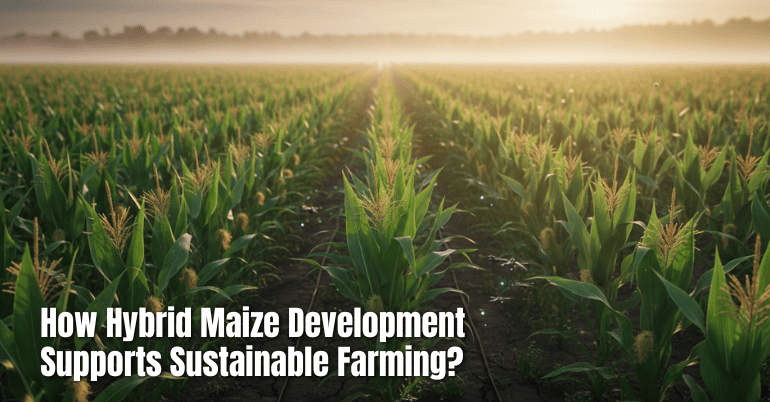
Hybrid maize development means making new maize seeds by crossing two good-quality parent plants. These new hybrid seeds grow stronger, give higher yields, resist diseases better, and grow evenly, helping farmers get better production and profit.
Some key benefits of hybrid maize development include:
Hybrid maize development strongly supports sustainable farming practices.
1. Pest and Disease Resistance
Hybrid maize is developed to resist common diseases like blast and sheath blight.
2. Support for Mechanised Farming
Hybrid maize is suitable for machines like power tillers, planters, and threshers.
3. Better Soil Health
Crop waste from hybrid maize can be left in the field or used as mulch.
4. Nutritional Security
QPM hybrid maize contains better-quality protein.
It helps reduce protein deficiency in rural and tribal areas.
Hybrid maize development also brings strong environmental and economic benefits.
Farmers who want to benefit from hybrid maize development can follow these simple tips:
1. Seed Selection
Use certified hybrid seeds suitable for your area.
Do not reuse hybrid seeds.
2. Sowing
Prepare the field well and sow on time.
Keep proper spacing and use one seed per hole.
3. Crop Care
Apply fertilizers in balance.
Control weeds early.
4. Harvest & Storage
Harvest when cobs are dry and grains hard.
SKB Seeds offers high-quality hybrid maize seeds specially developed for farmers in Maharashtra. These maize seeds grow quickly, produce healthy plants, and give bright golden-yellow grains that are in good demand in the market. They are strong against common pests and stresses, which helps farmers reduce crop losses and get a stable, high yield.
By choosing trusted varieties like Omkara Hybrid Maize Seeds and Deva Hybrid Maize Seeds, farmers can improve productivity and earn better profits. These hybrids are suitable for local soil and climate conditions, require proper care, and reward farmers with uniform cobs and good grain quality. SKB Seeds focuses on reliable performance so farmers can grow maize with confidence season after season.
Hybrid maize development is not just about higher yield. It is a complete solution that supports sustainable farming, soil health, nutritional security, and farmer income.
Need help choosing the right seeds for your farm? SKB Seeds is here to support you at every step. Get easy advice, clear guidance, and trusted seed information for better crops and higher yield. For more details about SKB Seeds hybrid maize seeds, contact +91 9589585697 or email info@skbseeds.com.
1. Can hybrid maize seeds be planted again?
Hybrid maize seeds can be planted, but seeds saved from hybrid cobs should not be reused because the next crop will give a lower and uneven yield.
2. What is the duration of hybrid maize?
Hybrid maize usually takes about 100-105 days to mature in the Kharif season.
3. How much hybrid maize seed is needed?
The hybrid maize seed rate is generally 7-10 kg per acre, depending on the variety and field conditions.
4. Which climate is best for maize?
Maize grows best in a warm climate with good rainfall, mainly in humid and moderately warm areas.