

 Admin: SKB Seeds
Soybean is one of the most important oilseed crops grown in India, especially across states like Madhya Pradesh, Maharashtra, and Rajasthan. Farmers often focus on rainfall, seed quality, and pest management, but one of the most powerful natural processes supporting soybean productivity happens underground—root nodulation.
Root nodules act like small nitrogen factories that help soybean plants obtain essential nutrients naturally. Understanding this process can help farmers reduce fertilizer costs and improve soil health.
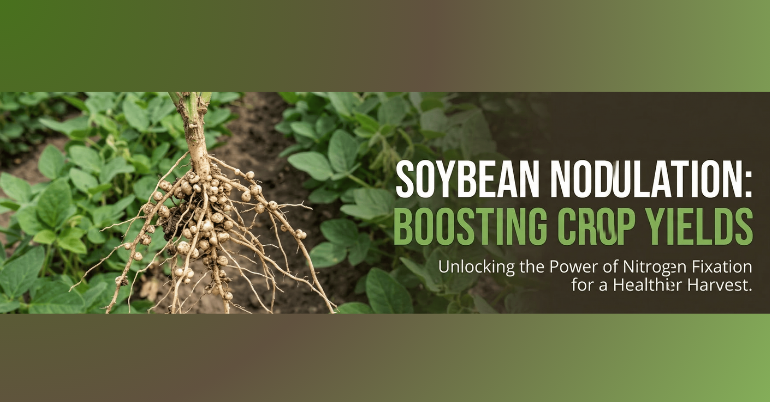
Root nodulation refers to the formation of small round structures called nodules on soybean roots. These nodules contain beneficial bacteria known as Rhizobium. The bacteria form a symbiotic relationship with soybean plants.
In this relationship:
This process is known as biological nitrogen fixation.
Since nitrogen is one of the most important nutrients required for plant growth, this natural system helps soybean plants grow vigorously even with lower nitrogen fertilizer application.
Key Facts About Root Nodules:
Nitrogen plays a critical role in several plant functions such as:
In many crops like wheat or maize, nitrogen must be supplied through fertilizers. However, soybean plants can obtain a large portion of their nitrogen requirement through root nodules.
Under good conditions, soybean crops can fix 40–120 kg nitrogen per hectare, which significantly reduces dependency on chemical fertilizers.
India’s soybean crop is mostly grown during the kharif season, which depends heavily on monsoon rainfall. Climatic factors strongly influence nodulation.
Important factors affecting nodulation include:
1. Soil Moisture
Moderate soil moisture during early crop growth encourages bacterial activity and nodule formation. Excess waterlogging, however, can reduce oxygen in the soil and damage nodules.
2. Soil Temperature
Soybean nodulation performs best when soil temperatures remain between 25–30°C, which is common during the early monsoon months in central India.
3. Soil pH
Rhizobium bacteria perform best in soils with pH between 6.0 and 7.5. Extremely acidic or alkaline soils may reduce nodulation efficiency.
4. Soil Health
Fields with good organic matter and balanced nutrients support stronger microbial activity and better nodule formation.
Farmers can easily check nodulation by carefully uprooting soybean plants around 30–35 days after sowing.
Healthy nodules usually have the following characteristics:
The pink color indicates active nitrogen fixation. White or green nodules are generally inactive.
Farmers can adopt several simple practices to ensure better nodulation and higher soybean productivity.
Use Quality Seeds
High-quality seeds with good genetic traits ensure stronger root development, which supports better nodulation.
Seed Inoculation
Treating soybean seeds with Rhizobium culture before sowing can significantly increase nodule formation, especially in fields where soybean is being grown for the first time.
Balanced Fertilization
Excess nitrogen fertilizers should be avoided because they may suppress natural nodulation. Instead, balanced nutrients like phosphorus and molybdenum help improve nodulation.
Proper Drainage
Avoid waterlogged fields during the early stages of crop growth.
Crop Rotation
Growing soybean in rotation with cereals helps maintain soil microbial balance and improves nodulation in subsequent seasons.
Long-Term Benefits for Soil Fertility
One of the biggest advantages of soybean nodulation is its contribution to soil health. After harvest, leftover nitrogen in the soil benefits the next crop in the rotation.
This means crops like wheat or maize grown after soybean can utilize residual nitrogen, reducing fertilizer requirements and improving sustainability.
Modern soybean breeding focuses on varieties that support:
Choosing reliable seed varieties from trusted companies ensures that farmers benefit from improved genetics designed for Indian agro-climatic conditions.
Root nodulation is a powerful natural mechanism that makes soybean a valuable crop for both farmers and soil health. By understanding how nodules work and adopting simple crop management practices, farmers can enhance nitrogen fixation, reduce fertilizer costs, and improve yields.
As soybean cultivation continues to expand across India, focusing on seed quality, soil health, and proper agronomic practices will remain essential for sustainable productivity.
Healthy roots mean healthy nodules and healthy nodules mean a stronger soybean crop.
Start by checking your own soybean roots this season. Those little pink nodules could be your most profitable investment and they grow for free.
Farmer's Quick Checklist for Better Nodulation