
 Admin: SKB Seeds
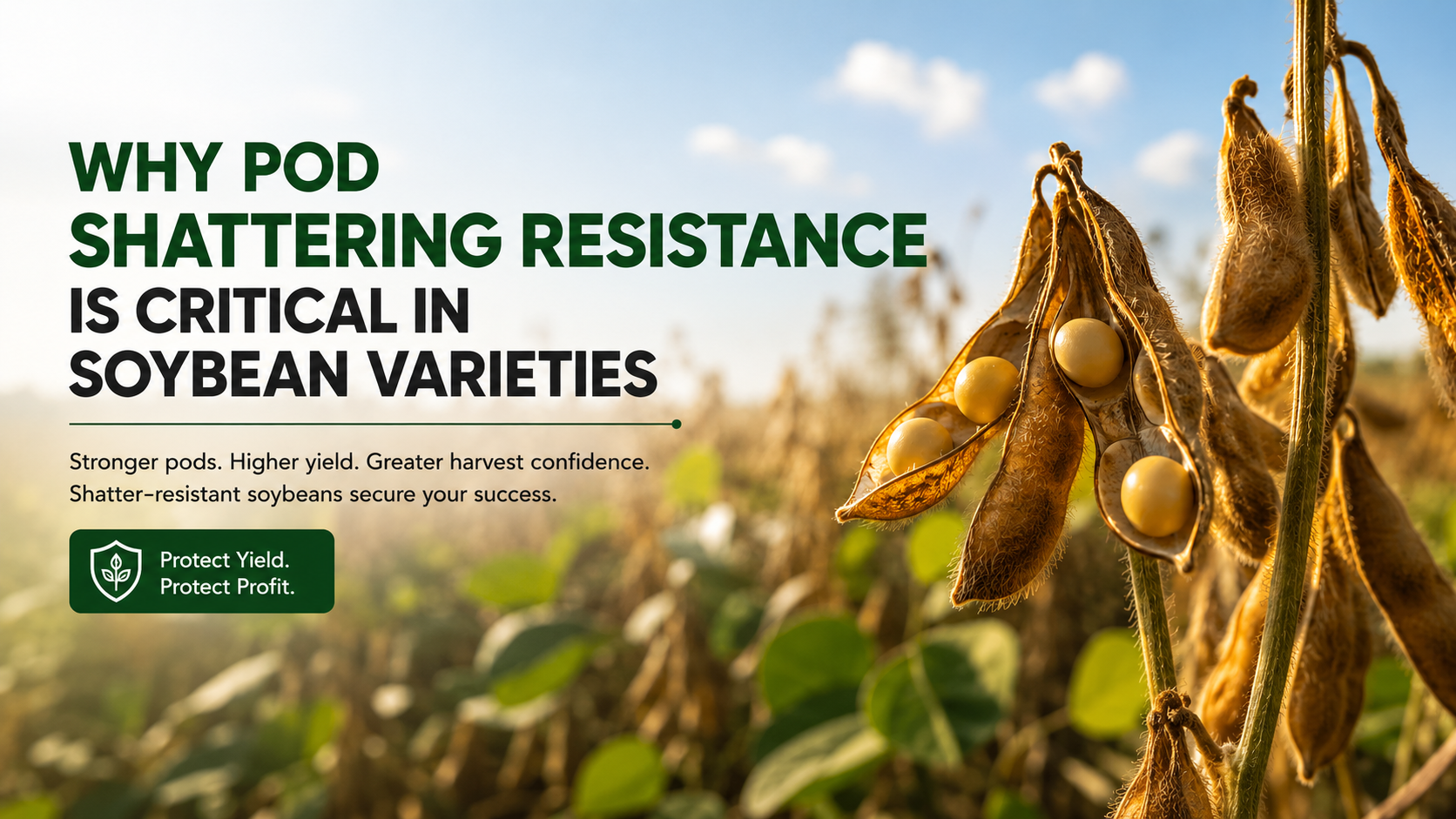
Why Pod Shattering Resistance is Critical in Soybean Varieties
Soybean is one of the most important oilseed crops worldwide, valued for its high protein and oil content. However, farmers often face significant yield losses due to a common problem known as pod shattering. As soybean pods mature, they can split open and release seeds before harvesting, leading to substantial economic losses. This is why pod shattering resistance has become a critical trait in modern soybean breeding programs.
In this article, we'll explore what pod shattering is, how it affects soybean yields, and why farmers should choose shatter-resistant soybean varieties.
What is Pod Shattering in Soybean?
Pod shattering is the natural process where mature soybean pods dry out and split open, dispersing seeds onto the ground. While this trait helps wild soybean plants spread their seeds for reproduction, it can be highly problematic in commercial farming.
Pod shattering typically occurs when mature pods are exposed to hot, dry weather conditions or when harvesting is delayed. Once the pods crack open, seeds fall to the ground and cannot be recovered during harvest.
How Pod Shattering Causes Yield Losses
Pod shattering can significantly reduce soybean productivity and profitability. The severity of losses depends on weather conditions, harvest timing, and the genetic characteristics of the variety grown.
Some major impacts include:
Direct Seed Loss
When pods shatter before harvest, soybean seeds fall to the soil surface, resulting in immediate yield reduction.
Reduced Farm Income
Lower harvested yields directly affect farmers' earnings, especially during seasons with prolonged dry weather.
Harvest Challenges
Fields with high pod shattering rates often show uneven maturity and increased harvest losses, making farm operations less efficient.
Volunteer Plants
Seeds lost during shattering may germinate in subsequent crops, creating unwanted volunteer soybean plants that compete with future crops.
In severe cases, pod shattering can cause yield losses ranging from 10% to 30% or even higher when harvest is significantly delayed.
Traits of Shattering-Resistant Soybean Varieties
Modern soybean varieties are developed with specific characteristics that reduce the risk of pod shattering.
Key traits include:
These traits help ensure that seeds remain securely enclosed within the pods until harvesting.
How Breeders Develop Shatter-Resistant Soybean Seeds
Plant breeders use advanced breeding techniques to develop soybean varieties with enhanced pod shattering resistance.
Germplasm Selection
Breeders identify soybean lines that naturally exhibit strong pod integrity and resistance to splitting.
Conventional Breeding
Selected parent plants are crossed to combine high yield potential with shatter-resistant characteristics.
Field Testing
Experimental varieties are evaluated under different environmental conditions to assess their resistance to pod shattering.
Marker-Assisted Selection
Modern breeding programs use molecular markers to identify genes associated with pod shattering resistance, helping breeders accelerate the development process.
Multi-Location Trials
Promising soybean varieties undergo testing across various regions to ensure stable performance and resistance under different climatic conditions.
These breeding efforts help deliver improved soybean seeds that combine productivity, adaptability, and reduced harvest losses.
Why Farmers Should Choose Improved Shatter-Resistant Varieties
Selecting shatter-resistant soybean varieties offers several practical advantages:
Modern soybean cultivation requires varieties that can withstand changing weather conditions while protecting yield until harvest. This is where improved research soybean varieties play a crucial role.
Shubh Mangal Pushpa and Shubh Mangal Avantika, developed and marketed by SKB Seeds Pvt. Ltd., are research soybean varieties known for their strong pod-holding ability and shattering resistance. These varieties help farmers reduce losses caused by delayed harvesting and dry weather conditions.
Benefits of Choosing Shubh Mangal Pushpa and Shubh Mangal Avantika
For farmers looking to maximize returns from soybean cultivation, choosing advanced research varieties such as Shubh Mangal Pushpa and Shubh Mangal Avantika can be an effective strategy to safeguard production and improve overall farm income.
Research soybean varieties such as Shubh Mangal Pushpa and Shubh Mangal Avantika are helping farmers combat pod shattering and protect valuable yields under challenging field conditions.
Conclusion
Pod shattering remains one of the most important causes of pre-harvest yield loss in soybean production. As weather patterns become increasingly unpredictable, growing soybean varieties with strong pod shattering resistance is essential for protecting yields and improving farm profitability.
By choosing improved shatter-resistant soybean seeds, farmers can reduce harvest losses, maintain higher productivity, and achieve more consistent returns season after season. For sustainable soybean cultivation, pod shattering resistance is no longer just a desirable trait—it is a necessity.